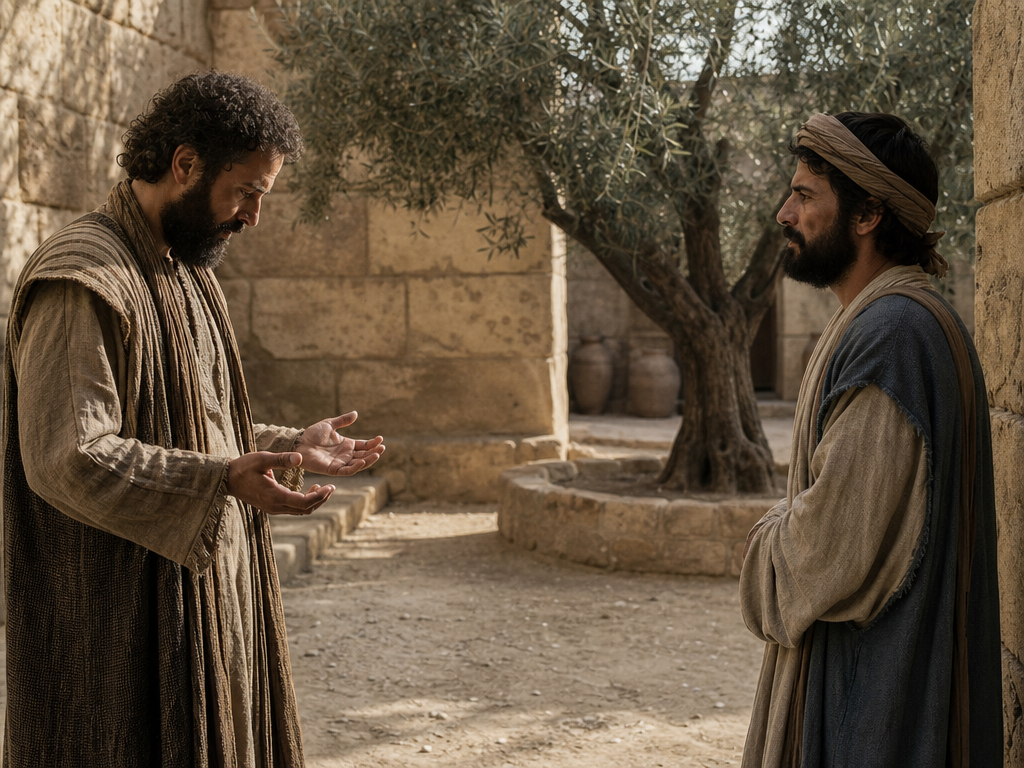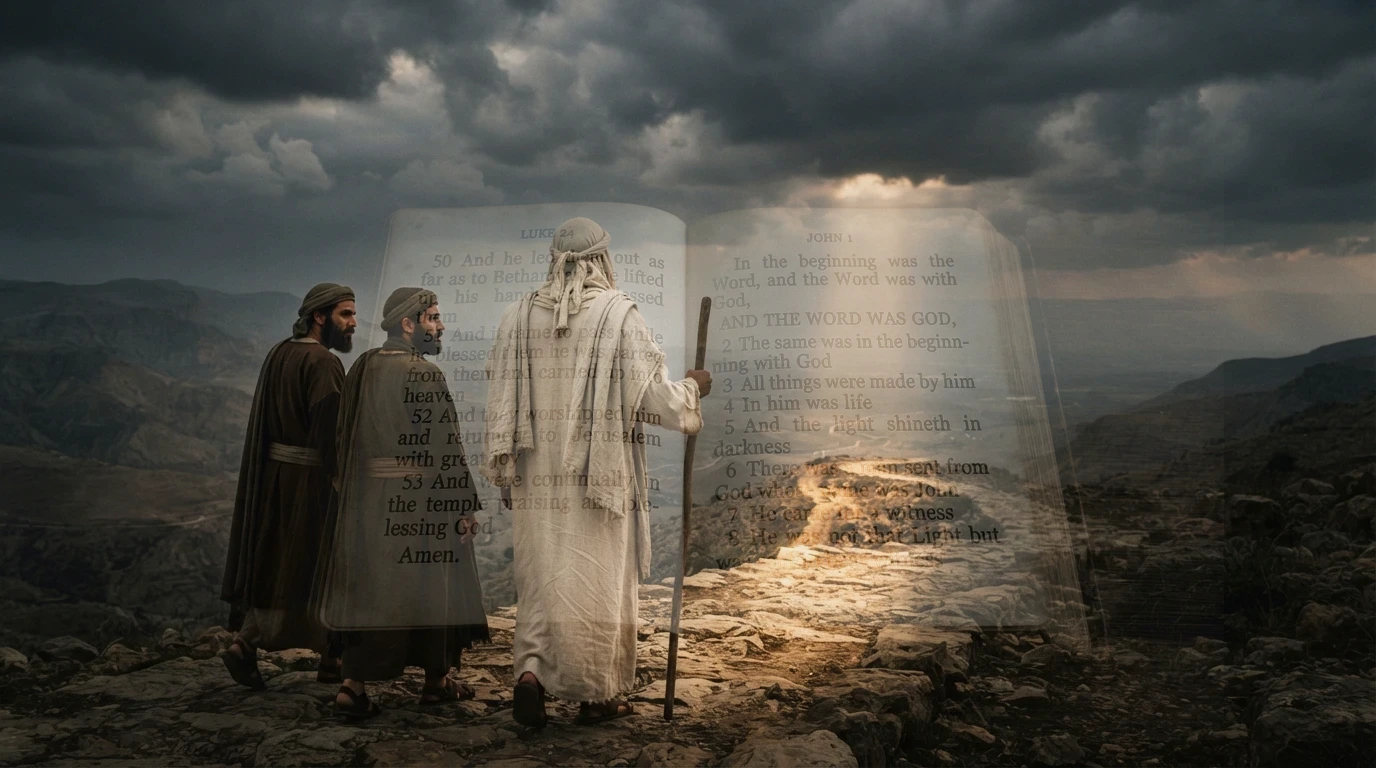

Jesus walking a rocky trail with two disciples, layered with an open Bible
Bill Perkins Ministries

Walk a few pageswith Jesus

Welcome.

Bible studies, songs, Instagram posts, essays, and sermons—made to read, hear, print, and share.

After fifteen years of walking daily through the Gospels, God has created a desire in me to share what Jesus has shown me—and to invite you to walk with me. Each Bible study weaves together Scripture, an Instagram post, a song, discussion questions, and prayer to help you see Jesus in fresh ways.

“My hope is that this becomes a home where you, your family, and friends can meet Jesus in fresh ways through Scripture and song.”

How to Reveal Your Spiritual Identity

“In that way, you’ll be children of your Father in heaven.”

Matthew 5:45

How do you determine
someone's identity?

You might examine
eye color,
hair color,
height,
build,
DNA,
or check official records.

But how do you recognize
someone's spiritual family?

Ancestry may show itself
in the body.

But Jesus says
our response to an enemy's abuse
reveals our spiritual DNA—
the Father's likeness in us.

“Pray for those who persecute you,
so that you may be children
of your Father in heaven.”
(Matthew 5:44–45)

Jesus doesn't mean that praying for
our persecutors makes us children of God.
Rather, it proves we are His children.

Jesus doesn't minimize the damage caused
by enemies who wound on purpose
and keep coming.

Yet Jesus says,
“Pray for them.”

The persecutor may control
what happens to you,
but they don't get
to determine whose likeness you bear.

Hatred tries to reproduce itself.
Prayer breaks the chain.

You may not know this about Jesus:

When He told us to pray
for those who abuse and persecute us,
He was not first teaching us
how to change them.

He was showing us
how to reflect
our Heavenly Father.

Jesus prayed,
“Father, forgive them.”
(Luke 23:34)

Stephen prayed,
“Lord, do not hold this sin against them.”
(Acts 7:60)

Prayer doesn't mean
calling evil good,
staying within reach of abuse,
or refusing wise boundaries and justice.

It means refusing
to let your response to cruelty
define you.

Scripture describes this identity:
we are hidden in Christ,
renewed in God's image,
and led by the Spirit.

“Your life is hidden
with Christ in God.”
(Colossians 3:3)

“You are being renewed
in the image of your Creator.”
(Colossians 3:10)

“All who are led
by the Spirit of God
are sons of God.”
(Romans 8:14)

Prayer expresses that renewal.
It makes the Father's likeness
visible in you.

Reflection Question

When I'm hurt,
does my response reveal
whose child I am?

What This Means for Me

I may not control
what an enemy says or does.
But in Christ,
I can reveal the kindness
of my Heavenly Father.

Prayer

Father,
when I'm abused,
teach me to pray
as Jesus prayed.
Let my prayers prove
I'm Your child.
I ask this in Jesus' name.
Amen.
Next in the sequence

The next four Instagram posts

Each picture carries its title and Scripture over the artwork, followed by the post copy, ready to review together.

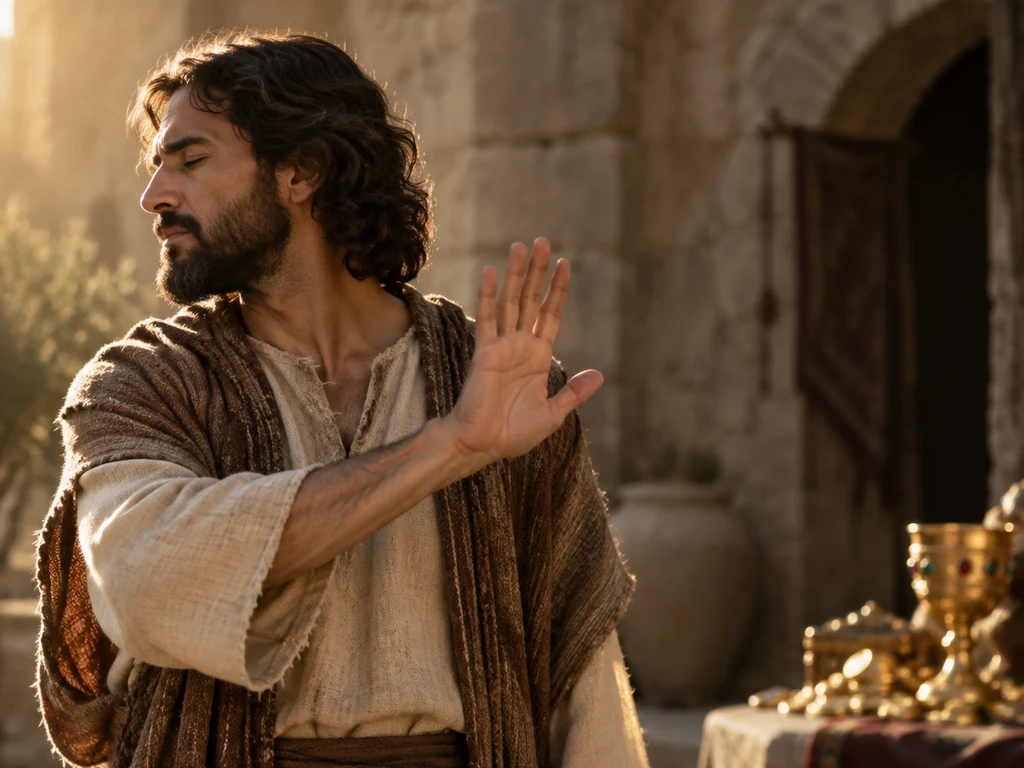
But I tell you…

But I tell you…

“You have heard it was said to your ancestors, ‘You shall not commit murder’…But I tell you…”

— Matthew 5:21–22

Post 221

Draft

Download Instagram JPEG ↓

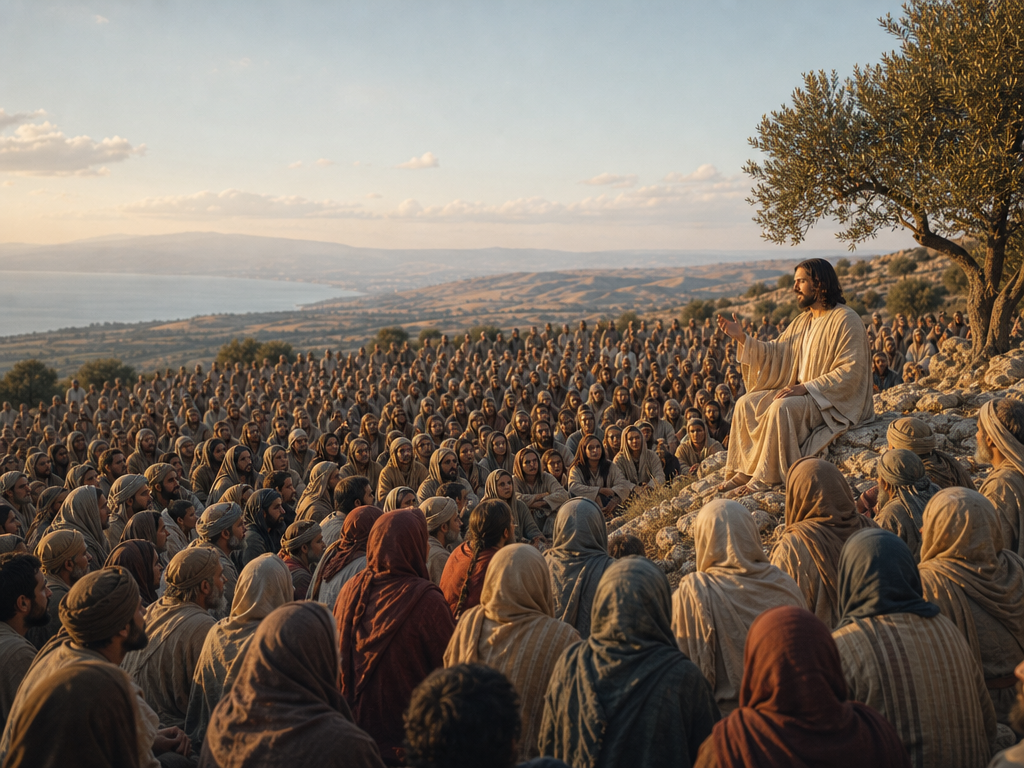
The Sermon on the Mount is the greatest sermon ever preached by the greatest Teacher who ever lived— a fifteen minute message that shaped nations and formed conscience.

Its turning point comes in three words that changed how humanity hears the voice of God:

“But I tell you…”

The crowd had only known leaders who spoke on God’s behalf. Moses delivered the Law. The prophets repeated it. But Jesus spoke as the One who gave it.

And the way He revealed that authority is through a contrast—an antithesis that sets one idea beside another to reveal the difference.

A contemporary example might sound like: “You have heard it said, ‘Look out for number one,’ but I tell you, ‘Put others first.’”

In the Sermon on the Mount, Jesus wasn’t speaking as one who received God’s words; He was speaking as God, revealing the Father’s heart beating within the Law.

The Six Antitheses restore the intention behind commands about murder, adultery, divorce, vows, retaliation, and hatred— revealing what tradition had obscured.

Just three words. A paradigm shift.

But I tell you. But I tell you. But I tell you. But I tell you. But I tell you. But I tell you.

With every “But I tell you,” Jesus opens the Law and lets us hear the heart of the Father, the heart of the Son, and the heart He is forming in His children through the Spirit— revealing the love that wrote the commands in the first place.

Reflection Question Am I willing to let Jesus speak as God and reshape how I understand every command?

What This Means to Me These contrasts remind me that Jesus doesn’t simply correct my behavior; He reveals my heart. He shows me where I’ve settled for the familiar instead of the true intention of God. His words invite me to live in the love that fulfills every command.

Prayer Father, help me hear Your heart in the words of Your Son. Prepare me for each contrast. Prepare me to receive what Jesus uncovers. Amen.

Jesus Got Angry

Jesus Got Angry

“You have heard it was said, ‘You shall not commit murder, and whoever murders will answer to the court.’”

— Matthew 5:21

Post 222

Draft

Download Instagram JPEG ↓

After saying that, Jesus went on to declare, “But I say that anyone who gets angry at his brother will answer to the court.” (Matt 5:22)

It’s easy to lose the meaning of the statement by focusing on the idea that anger and murder are the same. Jesus had another more important lesson— one I learned at a young age.

When I was a boy, I got angry with my mother and yelled at her. In response, she threatened to spank me. Burning with anger, I leaned forward, pointed at my backside, and said, “Please, Mom… spank me.”

Anger spewed from my mouth, as did my disrespect.

Then I heard a sound behind me.

It was my dad.

He smiled and said, “So you want a spanking, do you?”

Let me ask you something: If I had known my dad was standing behind me, do you think I would have expressed my anger that way?

That’s Jesus’ point.

Murder answers to the court. Anger does too. Not because anger is murder, but because anger carries the same accountability before the same God who sees both.

Jesus wants us to know the Father is standing behind us.

And if we lived with that awareness, we wouldn’t get angry when we do, and we wouldn’t express it as we do.

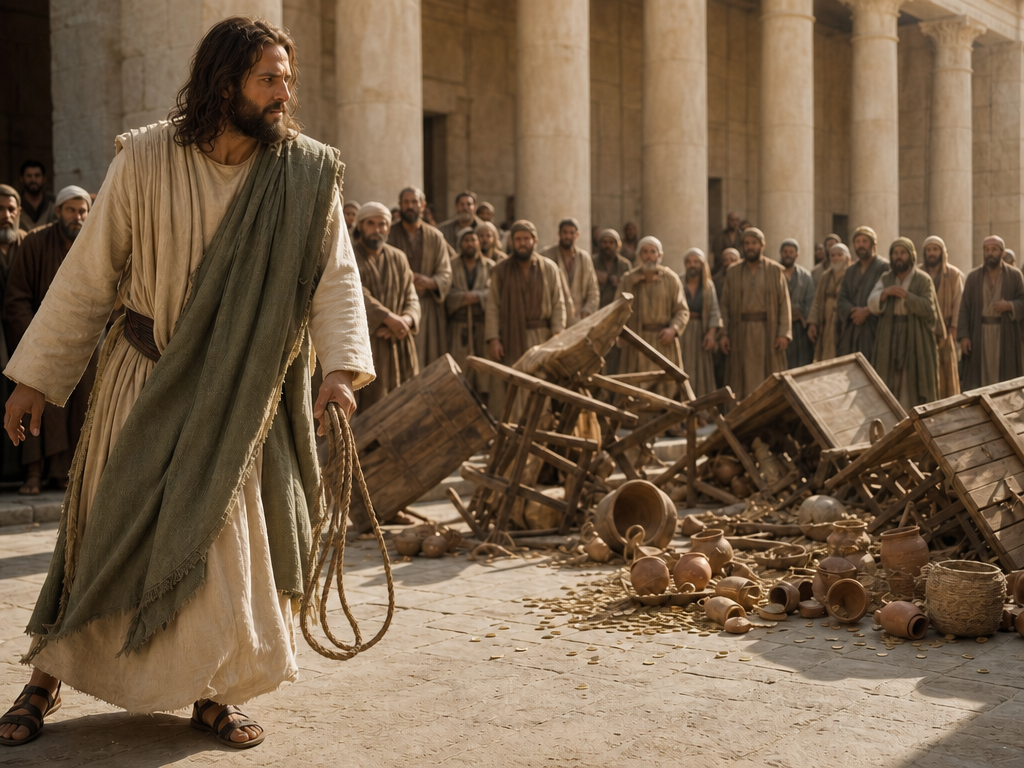
You may not know this about Jesus— He Himself got angry, four times:

At exploitation in the Temple (Jn 2:13–25). At corruption in the Temple (Matt 21:12–17). At the disciples blocking children (Mk 10:14). At hard hearted leaders who opposed healing on the Sabbath (Mk 3:5).

Jesus’ anger protected. Restored. Confronted injustice. Defended the vulnerable.

James said, “Human anger does not achieve the righteousness of God.” (James 1:20)

Paul said, “Be angry and do not sin… Do not let the sun go down on your anger.” (Eph 4:26)

Anger crosses the line when it stops protecting and starts attacking. When it stops defending and starts demeaning. When it stops restoring and starts wounding. When it allows evil to enter.

Jesus’ anger never crossed that line. And when we live with the awareness that the Father is standing behind us, neither will ours.

When Anger Crosses the Line

When Anger Crosses the Line

“Whoever says to his brother or sister, ‘You idiot!’ will have to face the Sanhedrin (Israel’s religious leaders). But whoever says, ‘You fool!’ will be in danger of hell fire.”

— Matthew 5:22

Post 223

Draft

Download Instagram JPEG ↓

Jesus told us that anger answers to God. Not because anger is always wrong, but because anger can go wrong.

And Jesus didn’t leave us guessing about the line we shouldn’t cross. He named it.

“Idiot” is Raca in Greek— the curse that lowers someone’s worth. “Fool” is moros in Greek— the curse that condemns someone’s future.

Two words. Two directions. Two ways anger crosses the line.

Raca is contempt. It’s the anger that lowers someone. It says, “You’re beneath me.” “You’re nothing.” “You don’t matter.” It’s a curse— the opposite of blessing (Luke 6:28).

Moros is condemnation. It’s the anger that erases someone. It says, “You’re beyond hope.” “You’re spiritually dead.” “You’re condemned.” It’s a curse— the opposite of praying for someone (Matthew 5:44).

One attacks a person’s value. The other attacks a person’s future.

And Jesus says both answer to God because both violate what God loves.

Maybe you’ve felt that shift inside— the moment anger stops burning hot and starts burning harmful. The moment frustration becomes contempt. The moment disappointment becomes condemnation. The moment you whisper a curse.

That’s the line. And Jesus wants us to see it before we cross it.

Because the Father is standing behind us. Watching. Guiding. Calling us back to love before anger becomes something else.

Jesus never cursed anyone. Even when He was angry, His words protected, restored, and called people back to the Father.

And when we live with the awareness that the Father is shaping our hearts, our anger will bless instead of curse.

Reflection Question: Where does my anger quickly shift from frustration to contempt?

What This Means to Me: Jesus is not asking me to stop feeling anger. He’s asking me to stay aware of the Father’s presence when I’m angry.

Prayer: Father, thank You for standing behind me. Give me an awareness of Your presence the moment my anger approaches the line. Form in me the kind of anger that looks like Jesus— protective, restorative, and full of love. In Jesus’ name, Amen.

Do This Before Worship

Do This Before Worship

“If you are offering your gift at the altar, and you remember your brother has something against you, leave the gift.”

— Matthew 5:23–24

Post 224

Draft

Download Instagram JPEG ↓

Leave it. Because the step you are about to take is a Beatitude step— a Christ-shaped step.

For when my anger wounds someone— a sharp word, a contemptuous tone, a name spoken in frustration— I place a stumbling block in their path. (Romans 14:13)

My wound becomes their temptation. Bitterness waits at the door. (Hebrews 12:15)

And to ignore that… to walk into worship while someone else carries my wound… is to fail to love. For love does no harm to a neighbor. (Romans 13:10)

Isaiah says God rejects worship when mercy is missing. (Isaiah 1:11–17) Micah says God desires mercy more than sacrifice. (Micah 6:6–8)

So Jesus says, “First be reconciled.”

And this step— this humbling step— is shaped by five Beatitudes.

It takes being poor in spirit to say, “I was wrong.” It takes mourning to feel the grief of what my anger caused. It takes meekness—restrained strength— to silence the flesh that wants to defend. It takes hungering for righteousness to want restoration more than vindication. It takes being a peacemaker to walk toward the person I wounded.

It takes mercy to lift the burden I placed on their shoulders. It takes a pure heart to remove the stumbling block so they do not fall.

The woman who washed Jesus’ feet loved much because she had been forgiven much. (Luke 7:47)

But when I refuse to seek forgiveness from someone damaged by my anger, I am refusing to extend the forgiveness I have received.

You may not know this about Jesus… but Jesus sees reconciliation as an act of worship. He sees mercy as holier than sacrifice. He sees peace-making as the proof of forgiveness. He sees humility as the doorway to His presence.

Reflection Question Who do I need to make things right with before I worship?

What This Means to Me When I seek forgiveness, I am embracing the forgiveness Christ gave me. When I refuse, I am resisting His mercy.

Prayer Father, give me humility, meekness, mercy, and purity of heart to make things right. Give me the courage to go first. Restore what anger broke. In Jesus’ name, Amen.

Stay Out of Jail

Stay Out of Jail

“Settle matters quickly with your adversary on the way.”

— Matthew 5:25

Post 225

Draft

Download Instagram JPEG ↓

In a moment, anger morphs into a weapon. We load our tongue. Flick off the safety. Aim at the heart. Pull the trigger. The shot tears through their foundation and wounds peace, dignity, safety, and trust.

And once the shot is fired, the countdown begins.

When the echo fades, the relationship enters a legal system of the soul. Someone owes a debt. Someone wants a payment.

“Agree with your adversary quickly, while you are on the way with him, lest your adversary deliver you to the judge, the judge hand you over to the officer, and you be thrown into prison. Truly I tell you, you will not get out until you have paid the last penny.” (Matthew 5:25–26)

It feels terrifying, like a threat.

But Jesus isn’t describing God’s wrath. He’s describing the human heart. When we refuse to make things right, we lock the cell ourselves. Resentment becomes the judge. Bitterness becomes the officer. Distance becomes a prison locked from the inside.

So He points to a sacred space: “Agree with your adversary quickly, while you are on the way with them.” The way— the stretch of road before the verdict drops. A ticking clock. A moving moment of grace where humility can still heal the wound.

Jesus gives us two windows to redeem what anger breaks.

The first is at the altar— a doorway of mercy that opens when the Spirit reminds us of the person we wounded. We leave the gift and make it right. (Matthew 5:23–24)

The doorway requires nine simple words: “I’m sorry.” “I was wrong.” “Will you forgive me.”

If we miss that first mercy, Jesus gives us a second window— a moving moment of grace on the road where the countdown is still running, where humility can still heal the wound before the verdict drops.

Refuse both, and the judgment becomes a cell in the heart— a life confined to bitterness, resentment, and the slow imprisonment of unresolved anger. The “last penny” is the full cost of refusing to seek reconciliation.

Jesus isn’t threatening punishment. He revealing mercy, giving us a way to redeem what anger breaks before it becomes a prison we build ourselves.

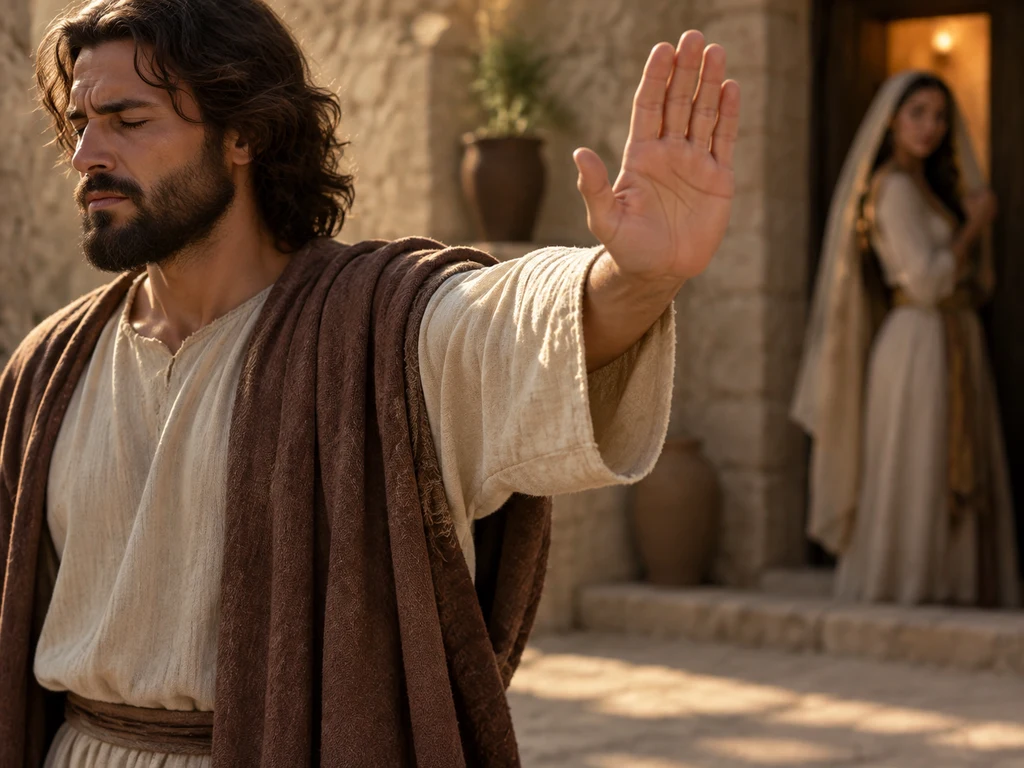
The Heart of Adultery

The Heart of Adultery

“But I tell you that every man who gazes at a woman with sexual desire has already committed adultery with her in his heart.”

— Matthew 5:28

Post 226

Draft

Download Instagram JPEG ↓

Adultery doesn’t begin in the body. It begins in the heart.

Jesus says, If a man gazes at a woman with sexual desire, he’s already crossed the line in the hidden place where no one else can see.

The verb “gazes” is in a tense that means a continued look, a sustained look, a look that doesn’t stop.

It’s not the accidental glance. It’s the chosen gaze. The repeated gaze. The gaze that begins to shape the heart.

And this matters, because Jesus isn’t talking about adultery itself. He’s talking about adultery in the heart. They’re not the same. One is the act. The other is the inward consent that precedes it.

This is the second antithesis— “You’ve heard it was said… but I tell you.”

Jesus isn’t raising the standard. He’s relocating it— from the act to the heart.

The heart is the place where desire grows, where imagination steers, where consent forms, where direction is chosen. The heart is the starting line for both purity and compromise.

If we gaze long enough, and often enough, we’re conditioning the heart to engage in the act we’ve imagined.

This is how the heart works. Desire grows. Imagination begins to steer the inner life. And the quiet yes forms long before the outer act appears.

This is David on the balcony— not just the lingering, but the lingering in a way that awakens desire, that stirs imagination, until the heart quietly gives its consent.

This is us.

Not our first look at beauty, but the second look, the chosen look, the returning look, the gazing look that warms desire, feeds imagination, and begins to turn the heart.

Fidelity is safe where desire is guarded.

Reflection: Where am I giving my heart a second look? What small rituals are warming desire in me?

What this means to me: Jesus is inviting me to guard desire at its beginning.

Prayer: Father, in Jesus’ name, turn my heart toward You.

The Lamp of the Body

The Lamp of the Body

“If the light in you is darkness, how great is that darkness.”

— Matthew 6:23

Post 227

Draft

Download Instagram JPEG ↓

When a man looks at a beautiful woman, it fills his mind with the warmth of light. It feels harmless, even holy.

The more he looks, the warmer the glow— a moth drawn to a flame.

But it isn’t light. It’s darkness dressed as an angel of light. A quiet adulterous shadow settling deep into his heart.

Not that the beautiful woman is evil. Beauty isn’t the problem. Gazing with sexual desire is the problem.

Because evil can use beauty as a disguise, stirring thoughts that demean the woman and weaken the fidelity of marriage.

And these thoughts and feelings may seem like the warmth of light. But Jesus looked right through the counterfeit. And you may not know this about Jesus: He said, “If the light in you is darkness, how great is that darkness.” Matthew 6:23

This is where Jesus’ warning meets Paul’s description: “their conscience seared as with a hot iron.” 1 Timothy 4:2

And a heart slowly hardened— losing all sensitivity. Ephesians 4:18–19

The eye welcomes the glow. The mind enjoys the warmth. And somewhere in that warmth, the heart grows silent. The conscience loses its edge. And the quiet voice of the Holy Spirit fades into silence. A shadow settles in the place where resistance and purity once lived.

Solomon speaks of this danger when he wrote, “Do not desire her beauty in your heart, and do not let her capture you with her eyelids.” Proverbs 6:25

In Hebrew poetry, “eyelids” is a metaphor for the glance, the sparkle, the moment of beauty that catches the eye. It’s not about the woman’s intent. It’s about the man’s vulnerability.

Solomon is saying, “Guard your eyes, because beauty can captivate before you realize it.”

He is warning the man, not accusing the woman. Because the eye is weak. The heart is impressionable. Beauty can stir desire unintentionally. And the danger is in the man’s gaze, not the woman’s presence.

Jesus is warning us— the eye is the first gateway to adultery— and it’s easier to shut a gate than survive a siege.

Gouge Out Your Eye

Gouge Out Your Eye

“If your right eye causes you to stumble, gouge it out and throw it away.”

— Matthew 5:29

Post 228

Draft

Download Instagram JPEG ↓

Did Jesus command us to gouge out our eye? If taken literally, it sounds that way.

Across the centuries, a few small Christian sects believed this and removed eyes and hands. But if Jesus meant it literally, devoted believers through history would have been blind and disabled. The absurdity of that idea exposes the fallacy.

So does Hebrew hyperbole— a teaching technique Jesus used. Hyperbole creates an impossible image to reveal a spiritual truth.

When He said it would be harder for a man who trusts in riches to enter the kingdom than for a camel to pass through the eye of a needle (Matthew 19:24), He was not describing difficulty. He was describing impossibility.

And that impossibility is the point. To maintain sexual purity, we must be willing to remove anything that traps us— even measures that feel extreme.

Jesus never told us to remove the eye. He told us to remove the stumbling block— the skandalon.

In Greek, the skandalon was the small stick in the trap, the trigger that snaps the trap shut. Jesus uses the eye as the image, but the skandalon is the target. If your eye becomes the skandalon— remove the skandalon. Not the eye. The skandalon. The cause that pulls the heart toward sin.

If Jesus meant literal mutilation, the disciples would have obeyed it literally. But none of them removed eyes or limbs. They removed access points. They removed triggers. They obeyed the meaning, not a misreading.

Paul says it plainly: “Make no provision for the flesh” (Romans 13:14). Remove the provision. Remove the access. Remove the trigger.

This is the mercy of Jesus: He shows us where the trap is and tells us how to dismantle it before it snaps shut.

Reflection Question What skandalon is Jesus asking me to remove today— not the eye, but the small stick in the trap that snaps my heart toward sin?

What This Means to Me It means Jesus is not asking me to harm myself. He is asking me to guard myself. To see the trap before I step into it.

Prayer Father, show me the skandalon— the small stick in the trap. Give me courage to remove it and grace to walk in purity. I ask this in Jesus’ name. Amen.

Cut Off Your Hand

Cut Off Your Hand

“If your right hand causes you to stumble, cut it off and throw it away.”

— Matthew 5:30

Post 229

Draft

Download Instagram JPEG ↓

The hand is one of God’s wonders. It senses warmth and cold, feels a feather, traces a father’s beard, and caresses an infant’s smiling face. With his hands Michelangelo painted the Sistine Chapel. With his hands Beethoven played what he could no longer hear. Our hands carry our heart into the world.

The hand blesses (Gen 48:14), rebuilds what is broken (Neh 2:18), heals what is wounded (Mt 8:3), lifts what has fallen (Mk 5:41), comforts the weary (Isa 66:13), and shapes what is good (Ex 31:3–5).

You may not know this about Jesus: He takes what God designed for beauty and uses an extreme image to protect it.

There are helping hands. Moses’ hands lifted in prayer while Aaron and Hur held them up (Ex 17:11–12). Boaz opened generosity to Ruth (Ruth 2). Jesus touched the leper (Mt 8:3), lifted Jairus’s daughter (Mk 5:41), and caught Peter sinking in the waves (Mt 14:31). The Good Samaritan bound wounds and carried a stranger to safety (Lk 10:34–35).

And there are sinning hands. “Your hands are full of blood,” Isaiah says (Isa 1:15). “Their hands commit iniquity,” Micah says (Mic 7:3). Achan saw and took (Josh 7:21). David saw and took (2 Sam 11:2–4). Judas took the silver (Mt 26:15). The thief steals until Christ teaches him to work instead (Eph 4:28).

Jesus’ image is extreme, but His meaning is merciful. He is revealing a real danger: the hand is how desire acts.

“Cleanse your hands… and purify your hearts” (Jas 4:8). The heart is deceitful (Jer 17:9), conceives sin (Jas 1:14–15), and directs life (Prov 4:23). And the hand carries desire into deed.

The snare — whatever bends the hand toward sin must be cut away. The deed — desire becomes dangerous the moment it seeks expression. The bridge — sin travels from the heart into the world through the hand.

Watch your heart. Guide your hand. Guard the crossing between them.

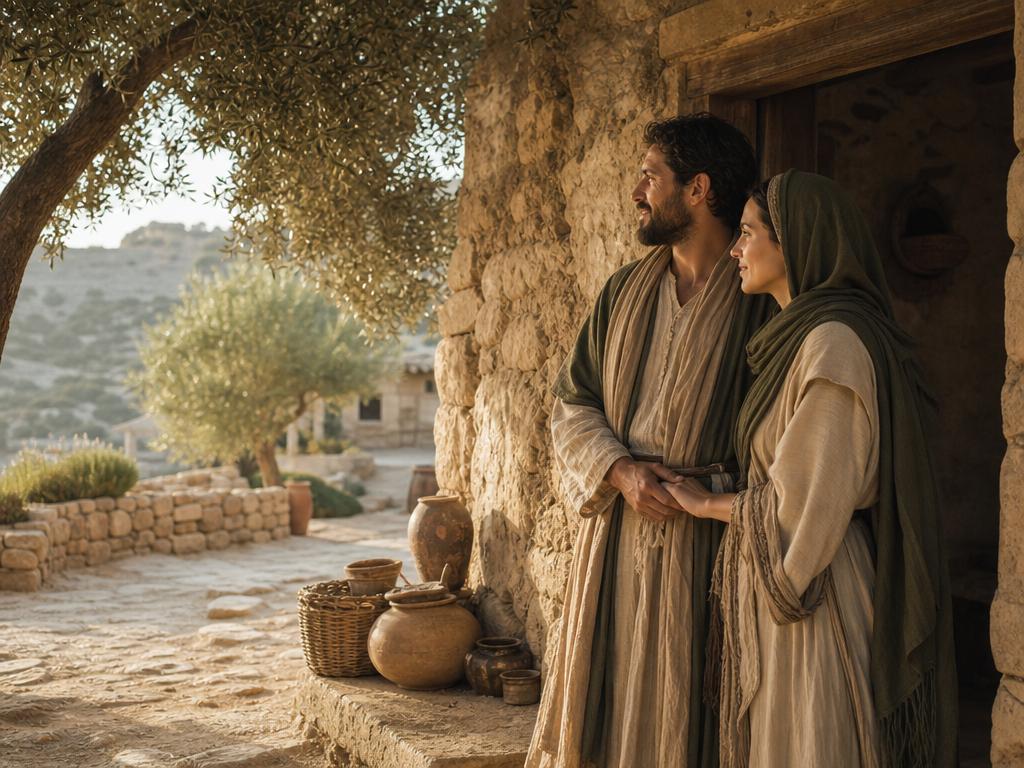
What Jesus Said About Marriage

What Jesus Said About Marriage

“From the beginning it was not so. What God has joined together, let no one separate.”

— Matthew 19:6

Post 230

Draft

Download Instagram JPEG ↓

“It was said, ‘Whoever divorces his wife, let him give her a certificate of divorce.’ But I say to you…”

To hear Jesus clearly, we must look at a later moment when the Pharisees asked, “Is it lawful to divorce a wife for any cause?”

That phrase—“for any cause”— reveals the wound Jesus sought to heal. .

A husband could dismiss his wife for burning a meal, speaking too loudly, displeasing his family, failing in a duty, or simply finding “another more pleasing.” Almost any fault—real or imagined— could become grounds to send her away.

And the woman carried the cost. Sent back to a family who often didn’t welcome her. Bearing the scandal that caused few men to want her. Her future narrowed. Her security collapsed. Her belonging gone.

But Jesus didn’t begin with their question. He began with creation.

“From the beginning it was not so. What God joined together, let no one separate.” Matt. 19:6

Marriage isn’t a contract. It’s a covenant— formed, sustained, and blessed by God.

God’s covenants cannot break because God does not fail. Humans can fail. Humans can betray. abandon. and sin.

The marriage covenant is based on three words— leave, cleave, and one flesh.

Leave A man and woman step out of one belonging and enter another.

Cleave Cleave is the weld. The holding fast. The bond of clinging with all one’s strength.

One flesh One flesh is union. Shared embodiment. Shared identity. A joining God Himself performs.

“What God has joined together…”

In this antithesis, Jesus addresses one way the marriage covenant can break and the effect it has on both husband and wife. And what He says next will show that covenant breaking is more complex and His mercy deeper than the surface of these words.

Reflection Where do I need to return to God’s design for covenant faithfulness?

What This Means to Me God’s loyalty shapes mine. His faithfulness steadies my heart and calls me to honor what He has made one.

Prayer Father, shape my heart by Your loyalty and love. Guard my unions and make me reflect Your faithfulness in every relationship You’ve given me. In Jesus’ name, amen.

The One — A Blending of the Four Gospels book cover

Free companion app

The One — A Blending of the Four Gospels

All four Gospels woven into one story — to read or to hear, with text and audio, always free. Available now in English and Ukrainian, with Spanish, Farsi, and Turkish to follow.

Prefer print? Order the book on Amazon →

When you are ready to explore

Every room. Every song. Every study.

Explore the libraryEnter the Great Hall

Receive a Devotional and a Song Each Week

Quiet. No rush. Just walking a few pages with Jesus.